TL;DR: Alabama slip & fall mistakes can permanently bar you from any compensation—even if the property owner was overwhelmingly at fault. Alabama's pure contributory negligence rule means even 1% of fault on your part can wipe out your entire claim. You have two years under Alabama Code § 6-2-38 to file suit, and missteps in the hours after a fall can haunt your case for years. Talk to us now to get matched with a vetted Alabama slip & fall attorney.
Why Alabama Slip & Fall Cases Are Especially Unforgiving
Most states use comparative negligence, which reduces your payout if you share some blame. Alabama does not. The state follows pure contributory negligence, one of the harshest fault standards in the country. If a jury finds you even 1% at fault—maybe you glanced at your phone, walked quickly, or wore sandals—you recover nothing, regardless of how dangerous the property owner's conditions were.
Alabama Code § 6-2-38 sets a strict two-year deadline to file a personal injury lawsuit from the date you were injured. Miss it, and your claim is permanently dead. Insurance adjusters know these rules cold, and they will use every one of your post-accident missteps to their advantage. Knowing the most common alabama slip & fall mistakes—before you make them—is the single best thing you can do for your case.
Mistake #1: Not Reporting the Fall Immediately
One of the fastest ways to sink a slip & fall claim is to leave the scene without reporting the incident to the property owner, manager, or on-site staff. Without an official incident report, the property owner can later claim the fall never happened—or that you never mentioned an injury at the time.
Always ask for a written incident report before you leave. Keep a copy. If the business refuses to create one, document that refusal in writing (a quick text or email to yourself noting the time and their response works). Your report creates a contemporaneous record that is very difficult for the defense to attack later.
- Ask for an incident report number or a copy on the spot.
- Note the name and title of the employee you spoke with.
- Never sign any document from the property owner or their insurer before consulting an attorney.
Mistake #2: Skipping the Doctor—or Waiting Too Long
Adrenaline masks pain. Many people walk away from a fall feeling shaken but okay, only to discover fractures, torn ligaments, or a concussion hours later. If you delay medical care, the insurance company will argue your injuries were not caused by the fall—or that they were minor enough that you did not bother seeking treatment.
Go to an emergency room, urgent care, or your primary doctor the same day if at all possible. Be honest and thorough: describe every part of your body that hurts, no matter how minor it seems. Follow every follow-up instruction your doctor gives you. Gaps in treatment are a gift to defense counsel.
Mistake #3: Failing to Preserve Evidence at the Scene
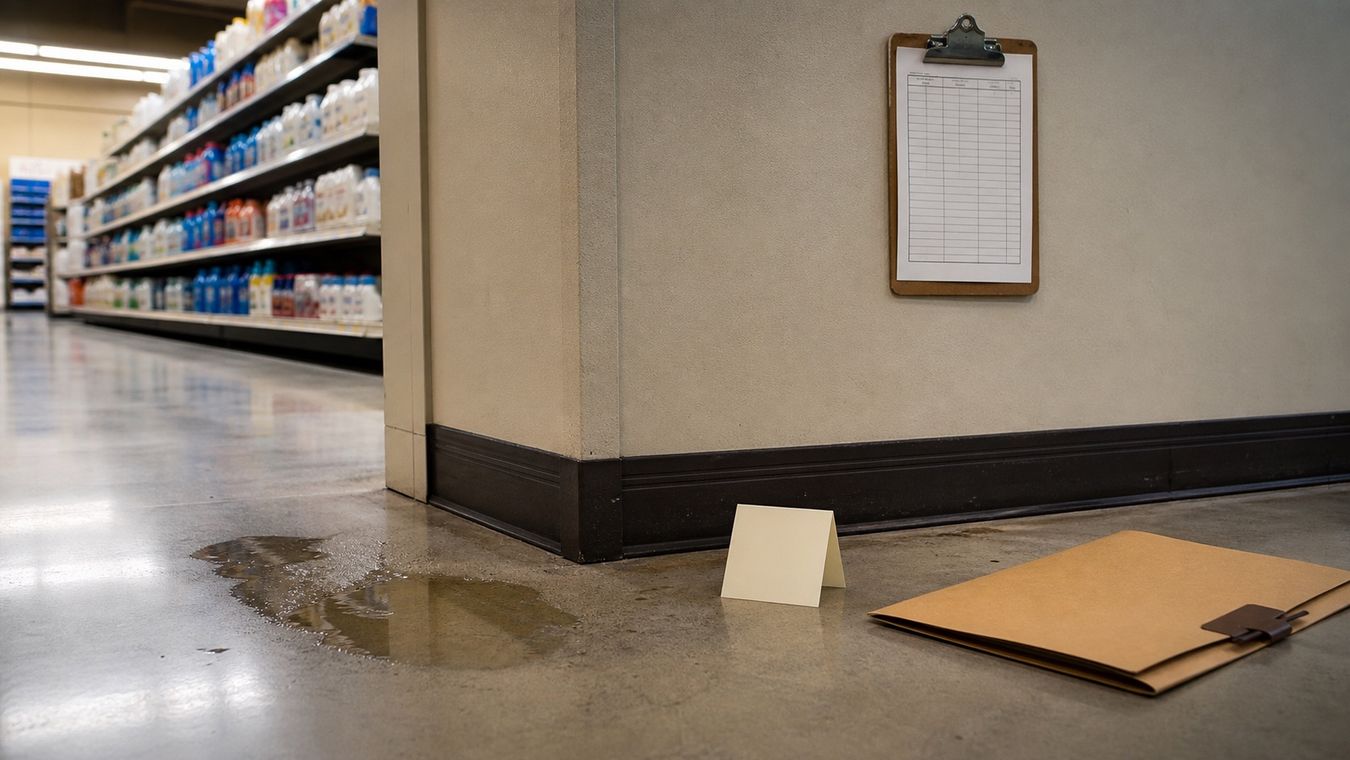
Evidence disappears fast. Wet floors dry. Broken tiles get fixed. Security footage is overwritten—sometimes within 24 to 72 hours. The property owner controls all of it. Your window to capture independent evidence is extremely short.
If you are physically able, do these things before you leave the scene:
- Photograph or video the hazard from multiple angles, including any missing or inadequate warning signs.
- Photograph your injuries, your clothing, and your footwear.
- Get the names and contact information of every witness.
- Note exactly where you fell—aisle number, distance from an entrance, any nearby landmarks.
An attorney can send a legal preservation letter demanding that the property owner retain surveillance footage and maintenance logs. Without one, that evidence may simply disappear. Get matched in under a minute so a lawyer can act before the footage is gone.
Mistake #4: Talking to the Insurance Adjuster Without Counsel
Within days of your fall, the property owner's insurer will likely call. The adjuster will sound helpful and sympathetic. Do not be fooled. Their job is to minimize your payout—and Alabama's contributory negligence rule gives them a powerful tool: if you say anything suggesting you were not paying full attention, they will use it to argue you share fault.
Common adjuster tactics include asking you to give a recorded statement, asking leading questions about your footwear or walking speed, and offering a quick, lowball settlement before you know the full extent of your injuries. You have no legal obligation to give a recorded statement to the other side's insurer. Politely decline and contact an attorney first.
- Never accept a settlement before completing medical treatment.
- Never provide a recorded statement without your attorney present.
Mistake #5: Misunderstanding the Notice Requirement
Proving the property owner was negligent is not enough. Alabama law also requires you to show the owner had notice of the dangerous condition—either actual notice (they knew about it) or constructive notice (the hazard existed long enough that they should have found it through reasonable inspection).
This is one of the trickiest elements of any Alabama slip & fall claim. Courts look at how long the hazard existed. A spill that was present for only a few minutes may not establish constructive notice, while a condition that persisted for 45 minutes or more during business hours generally can. Evidence like surveillance footage, maintenance logs, and employee testimony is critical to proving this element—and much of it sits in the property owner's hands.
If you fell on a government-owned property—a city building, public sidewalk, or county facility—the deadline problem is even worse. Claims against municipalities in Alabama may require written notice within as little as six months under Alabama Code § 11-47-23, far shorter than the standard two-year window. Missing that notice deadline can end your case before it starts.
Mistake #6: Waiting Too Long to Contact a Lawyer
The two-year filing deadline under Alabama Code § 6-2-38 can feel like plenty of time. It is not. Evidence erodes. Witnesses move or forget. Defense attorneys begin building their case immediately. The longer you wait, the weaker your position.
An experienced Alabama slip & fall attorney can send preservation letters, investigate the scene, identify all liable parties (property owners, tenants, maintenance contractors), and build the factual record needed to overcome the contributory negligence defense. Getting counsel early is especially critical in Alabama because the defense only needs to plant a small seed of doubt about your conduct to bar your recovery entirely.
FAQ
How long do I have to file a slip & fall lawsuit in Alabama?
Under Alabama Code § 6-2-38, you generally have two years from the date of the fall to file suit. If your fall happened on government-owned property, a separate notice requirement under Alabama Code § 11-47-23 may require you to act within six months. Missing either deadline typically bars your claim permanently.
What is contributory negligence, and how does it affect my case?
Alabama follows pure contributory negligence, meaning that if you are found even 1% at fault for your own fall, you are completely barred from recovering any compensation—no matter how negligent the property owner was. This makes it critical to avoid statements or actions that could be used to assign any portion of fault to you.
Does it matter whether I was a customer or a social guest?
Yes. Alabama law assigns different duties of care based on your legal status. Business invitees—customers in a store, for example—are owed the highest duty of care, including reasonable inspection and prompt hazard correction. Social guests (licensees) are owed a lesser duty. Your status at the time of the fall directly affects what you must prove and your chances of success.
What if the property owner fixed the hazard right after my fall?
Subsequent repairs are generally not admissible as evidence of negligence under Alabama rules of evidence. However, the condition before the repair is still highly relevant. Photographs you took at the scene, witness statements, and any maintenance records from before the fix can all help establish that the dangerous condition existed and that the owner had notice of it.
What damages can I recover in an Alabama slip & fall case?
If you establish liability and defeat the contributory negligence defense, you may recover economic damages such as medical bills and lost wages, and non-economic damages such as pain and suffering. Alabama does not cap compensatory damages in most personal injury cases, though claims against government entities are subject to damage limits.
Ready to Protect Your Alabama Slip & Fall Claim?
Alabama slip & fall mistakes are easy to make and hard to undo. The contributory negligence rule, strict filing deadlines, and the property owner's control over key evidence all work against unrepresented victims. The sooner you act, the stronger your position. DearLegal matches injured Alabamians with experienced, pre-screened slip & fall attorneys—fast, free, and with no obligation. Start your case today and let a vetted Alabama attorney review your situation before another day of evidence disappears.
DearLegal is not a law firm and does not provide legal advice. This article is for informational purposes only. Consult a licensed attorney in your state for advice on your specific situation.